
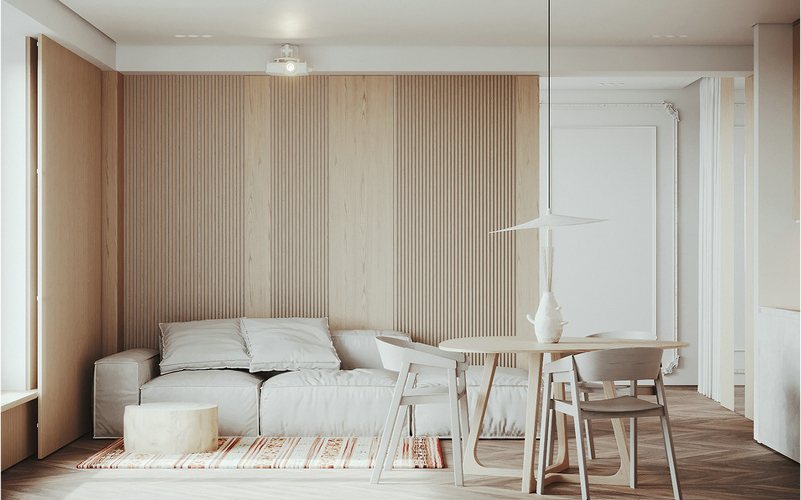
Space in the city rarely comes generously, especially in compact flats or smaller houses. That doesn’t mean you need to sacrifice style. In fact, it’s in tight spaces that design becomes clever, deliberate, and surprisingly creative. Modern minimalist interior design has grown into the go-to approach for people who want calm, uncluttered rooms that still feel personal and liveable. At its best, it’s not about living with less, it’s about buying smart, styling thoughtfully, and ensuring every piece serves a clear purpose.
This article explores how you can apply modern minimalist interior design at home, with emphasis on the kinds of furniture, décor, and materials that actually make a difference in smaller spaces. Think of it less as a set of rules and more as a toolkit: one that brings balance, comfort, and visual breathing room into even the most compact living area.
Why Modern Minimalist Interior Design Works in Small Homes
Minimalism can sound cold or sparse to anyone who pictures bare white walls and a single chair in the corner. The reality is much warmer. Modern minimalist interior design focuses on clean lines, simple silhouettes, and functional layouts that open up a space. This is particularly powerful in small flats, where cluttered corners or oversized furniture can quickly overwhelm.
The “less is more” philosophy isn’t about stripping your personality from your rooms. Instead, it’s about creating a visual rhythm where furniture is scaled to fit, storage is built to hide, and decorative accents are carefully chosen. Done well, the result is a home that feels calm, spacious, and well put together without trying too hard.
Furniture that Works Twice as Hard
The first rule of modern minimalist interior design for compact homes is straightforward: every piece should justify its footprint. Multi-functional furniture is the easiest way to achieve this.
- Sofa beds or daybeds are ideal for studio flats or guest rooms, offering both seating and sleeping options.
- Extendable dining tables can be tucked neatly against a wall for everyday meals and expanded only when guests arrive.
- Storage ottomans provide a place to sit or prop your feet while hiding blankets, books, or children’s toys inside.
When choosing pieces, pay attention to the form as much as the function. Low-profile designs with clean lines help maintain an uncluttered look, ensuring your home feels open even when it’s fully furnished. A consistent palette across your minimalist furniture also prevents the room from feeling piecemeal, helping create a sense of flow. It’s not about squeezing in everything you want, but about selecting the right few pieces that pull double duty.
Light and Neutral Foundations
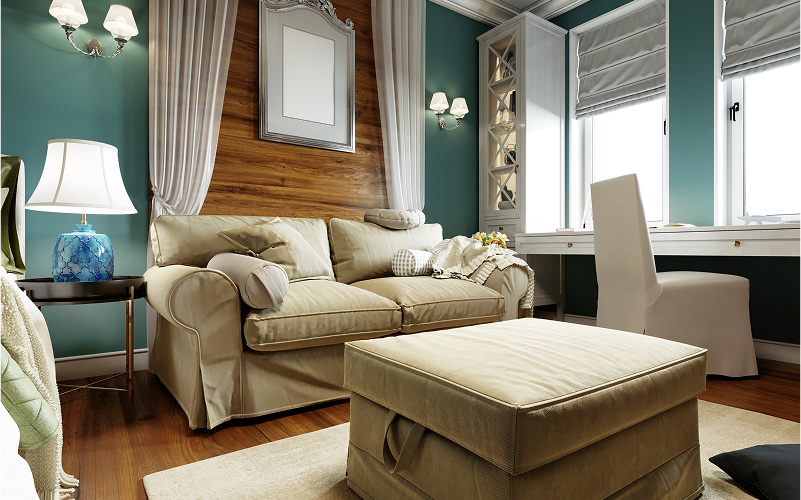
Colour plays an enormous role in shaping the perception of space. Modern minimalist interior design often begins with a neutral base: whites, greys, beiges, and pale woods. These shades create a consistent canvas, reflecting natural light and making a room feel larger.
For compact homes, neutrals are especially effective because they blur the boundaries between walls, floors, and ceilings. This visual trick elongates a space, making it feel airier. From there, you can add texture through fabrics and subtle accents rather than piling on bright colours.
If pure white feels too stark, opt for soft greys or warm sandy tones. They provide the same sense of spaciousness while adding a little cosiness to the atmosphere.
Storage as a Design Feature
Clutter is the nemesis of modern minimalist interior design, but hiding it doesn’t always mean shutting it behind a door. Smart storage solutions can themselves become design features.
- Floating shelves keep books and decorative pieces organised without taking up floor space.
- Built-in wardrobes stretch from floor to ceiling, eliminating awkward gaps where dust tends to collect.
- Under-bed drawers turn what’s usually wasted space into a hidden organiser.
The key is to choose storage with sleek finishes and flush lines so it blends into the room’s architecture rather than shouting for attention. When executed properly, storage becomes almost invisible, keeping your rooms tidy without feeling like you’re constantly tidying.
ALSO READ: 5 MUJI-Inspired Home Decor Ideas For Minimalist Living
Statement Pieces over Many Trinkets
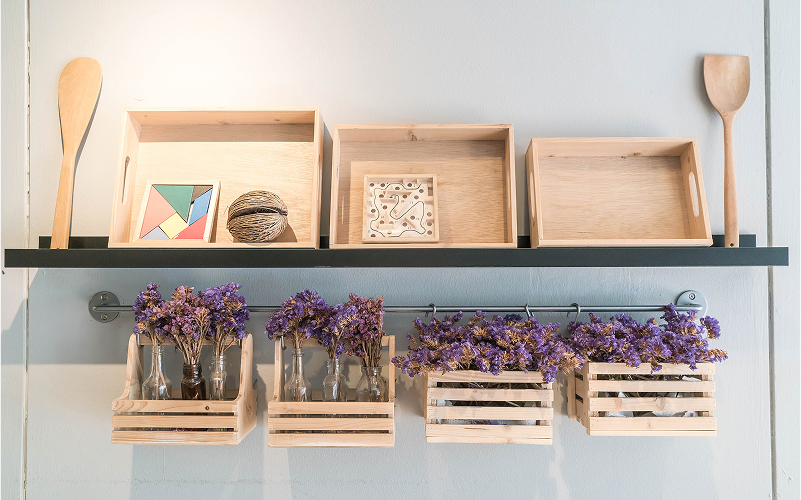
Minimalism isn’t about living without beauty. It’s about curating beauty. Rather than filling your shelves with knick-knacks, choose one or two statement pieces that reflect your taste.
A sculptural armchair, an oversized mirror, or a single striking artwork can become the visual anchor of a room. These bold choices stand out precisely because the surrounding design is restrained. In compact homes, this technique prevents visual clutter while still allowing for personality.
Remember: in modern minimalist interior design, restraint is a form of expression. By showing you can live without excess, the few items you highlight gain more meaning and weight.
ALSO READ: Minimalist Interior Design: Embracing Simplicity in 2025
Natural Materials for Warmth
A risk with clean lines and neutral colours is that a room may feel clinical. The antidote is texture. Modern minimalist interior design leans heavily on natural materials to bring warmth into a space.
Wood, stone, rattan, linen, and wool all add tactile richness without disrupting a minimalist scheme. For instance, a pale oak dining table instantly softens a room dominated by white walls, while a woollen throw draped over a slimline sofa adds comfort without adding clutter.
Natural finishes also age gracefully. Unlike glossy plastics that show scratches or fingerprints, materials like wood and linen develop character over time, reinforcing the lived-in but composed look minimalism aims for.
Light Matters More Than You Think
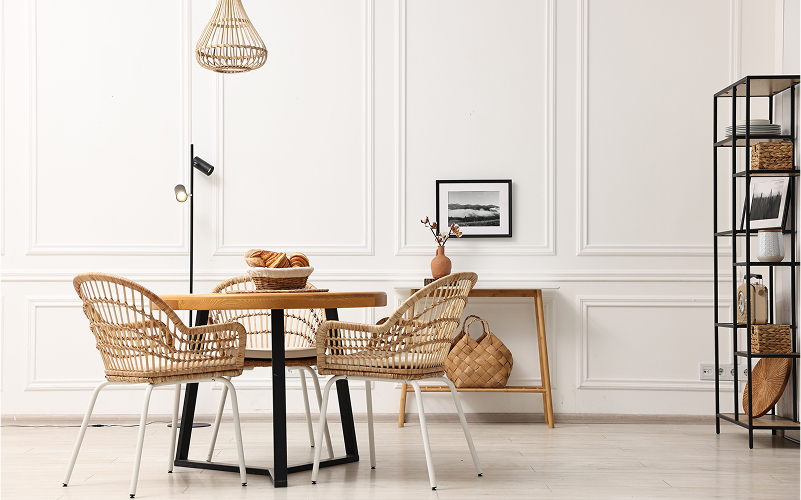
In a compact flat, natural light is your greatest ally. Modern minimalist interior design maximises it by avoiding heavy curtains, bulky blinds, or dark shades that block sunlight. Instead, sheer fabrics, roller blinds, or even bare windows with frosted glass allow light to flood the space.
Mirrors are another clever trick. Positioning a large mirror opposite a window bounces light around the room, instantly making it feel larger and livelier. Pendant lighting or wall sconces in slim designs can also spread brightness evenly without crowding the space with chunky lamps. A layered lighting plan works best, combining ambient, task, and accent lights to adapt the mood for work, dining, or winding down. Even a compact flat feels more flexible and inviting when lighting is treated as a design feature rather than an afterthought.
Compact Kitchens that Don’t Feel Cramped
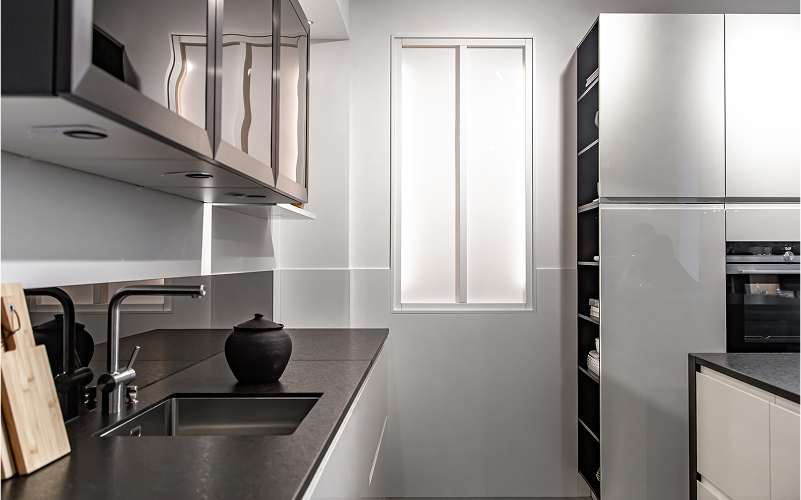
Kitchens in small homes are notorious for feeling overstuffed, but they’re also perfect for applying minimalist thinking. Modern minimalist interior design in kitchens means streamlined cabinetry, integrated appliances, and open shelving for daily essentials.
Stick to a single colour palette, white with natural wood accents works beautifully, and keep counters as bare as possible. When everything has a designated place, cooking feels smoother and the room looks tidier.
To stretch the sense of space, consider reflective splashbacks or glossy cabinet finishes. They bounce light around and visually expand what might otherwise feel like a tight galley. Slim-profile handles and push-to-open drawers enhance the clean look while removing the bulk of traditional cabinetry. Even a small kitchen can feel efficient and stylish if every choice supports clarity and order.
ALSO READ: The Ultimate Shopping Guide for Kitchen Interior Decoration That Pops
Bedrooms that Breathe
A minimalist bedroom should be a sanctuary. In compact homes, this translates into keeping the furniture list short: bed, side tables, maybe a slim dresser.
Choose a bed with hidden storage beneath, freeing up space that would otherwise be consumed by a bulky chest of drawers. Stick to calming colours and lightweight fabrics for bedding. Artwork can be limited to one framed piece above the bed, creating a focal point without crowding the walls.
The goal is to ensure your bedroom feels like a place to rest, not another cramped corner of the flat.
ALSO READ: How to Shop Smart When Planning the Best Interior Design for Your Singapore Home
Bathrooms that Embrace Simplicity
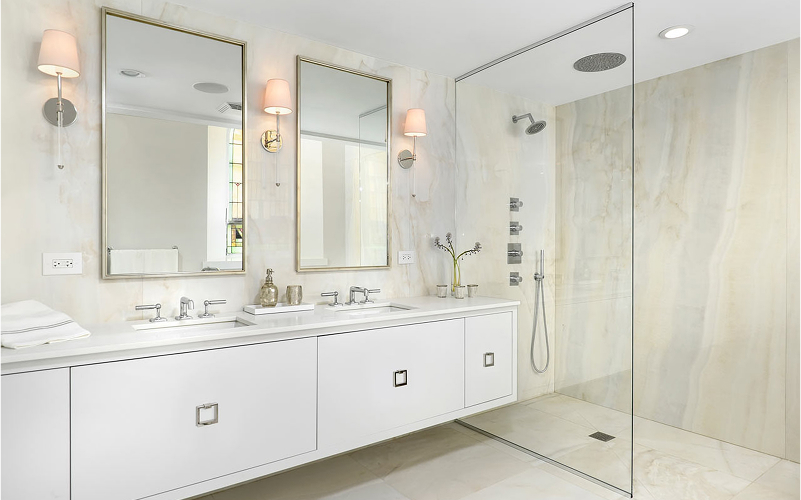
Bathrooms are often the smallest rooms in any home, which makes them ripe for minimalist design. Floating vanities, wall-hung toilets, and frameless shower screens all create a sense of openness.
Stick to light colours and glossy surfaces that reflect light. Open shelving with woven baskets keeps toiletries neat while adding subtle texture. Even in this tiny space, modern minimalist interior design works its magic by stripping back excess and focusing on clean, functional elegance.
Buying with Intent
Minimalism has as much to do with mindset as with furniture choices. It’s about intentional buying. Instead of impulse purchases, think through each addition: Does it serve a purpose? Does it fit visually with the rest of the space? Will it last?
Compact homes thrive when every piece is chosen carefully. By resisting the temptation to crowd your rooms with trendy but unnecessary items, you ensure your design stays timeless and easy to live in.
LEARN MORE: Minimalist Interior Design: Embracing Simplicity in 2025
A Balanced Lifestyle Through Design
Modern minimalist interior design isn’t simply a style trend. For people living in smaller flats, it’s a way of reducing visual stress, improving functionality, and enjoying a home that feels calm rather than chaotic. By choosing smart buys: furniture that serves more than one role, neutral palettes, natural textures, and clever storage, you can transform compact rooms into comfortable, welcoming spaces.
Minimalism reminds us that our homes don’t have to be bursting with items to feel full of life. With the right balance, even the smallest home can become a retreat of calm efficiency.
Visit Living Comforts to explore pieces that fit seamlessly into a minimalist lifestyle while still making compact spaces feel like home.
