
Key Takeaways
- Quality materials and thoughtful proportions matter more than quantity or trend-driven choices.
- Neutral colour palettes provide a flexible foundation, allowing interiors to evolve over time.
- Layered textures and natural materials add depth, warmth, and tactile richness.
- Furniture and lighting should support daily routines while enhancing visual coherence.
- Personalisation comes from curated, meaningful pieces rather than decorative overload.
- Practical needs can be integrated seamlessly without compromising refinement.
Introduction
Modern luxe interior design represents an evolution in how we perceive and create sophisticated living spaces. Gone are the days when luxury meant ornate gilding, heavy drapery, and excessive ornamentation. Today’s approach to high-end interiors celebrates clean lines, quality materials, and restrained elegance. The philosophy centres on creating environments where every element serves a purpose whilst contributing to an overall sense of refinement.
The contemporary interpretation of luxury in home design stems from a growing appreciation for minimalism paired with sumptuous textures and carefully selected statement pieces. Rather than overwhelming a space with decorative objects, modern luxe interior design encourages thoughtful curation. Each item in your home should earn its place through either functional value or aesthetic contribution. Spaces designed with this approach feel simultaneously uncluttered and richly layered, achieving a delicate balance between simplicity and sophistication.
What distinguishes this design philosophy from other contemporary styles is its unwavering commitment to quality over quantity. Investment pieces crafted from premium materials form the foundation of any luxurious space. Natural stone, solid wood, brushed metals, and fine textiles create tactile experiences that elevate daily living. The sensory aspect plays a crucial role—surfaces invite touch, lighting creates ambience, and spatial arrangements promote both functionality and visual pleasure, and the sum of these parts creates an endearing, sophisticated and elegant look.
Establishing Your Colour Foundation
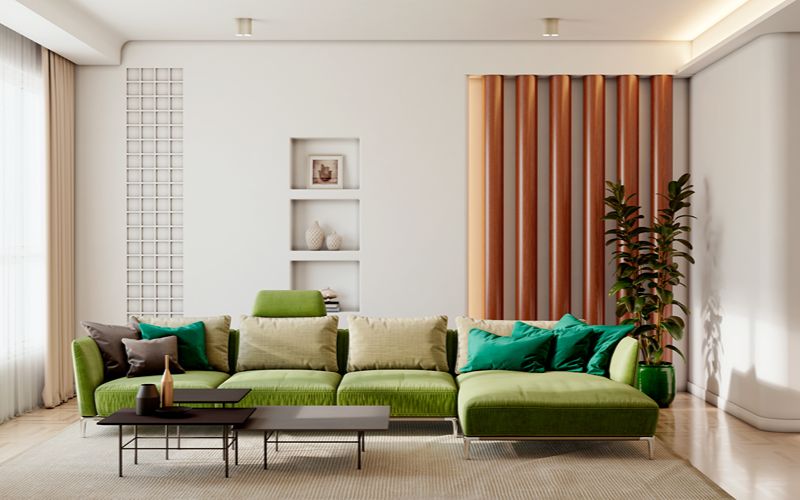
Colour selection forms the backbone of successful modern luxe interior design. The palette typically gravitates towards neutral tones: warm whites, soft greys, rich beiges, and deep charcoals, providing a sophisticated canvas for layering textures and introducing accent colours. Neutrals possess an inherent versatility, allowing you to refresh your space seasonally without requiring complete redesigns.
Warm neutrals create inviting atmospheres whilst maintaining the crisp aesthetic essential to contemporary luxury. Creamy whites with subtle undertones of beige or grey prevent spaces from feeling sterile or clinical. Greige, the marriage of grey and beige, has emerged as a favourite among interior designers seeking to bridge cool and warm tones. Layering various shades within the same neutral family adds depth and prevents monotony in most modern luxe interior designs.
Introducing colour through carefully selected accents prevents neutral schemes from appearing flat. Deep jewel tones, such as emerald green, sapphire blue, or rich burgundy, also work beautifully as accent colours in modern luxe spaces. These hues are often most effective when appearing in controlled doses, such as:
- Soft furnishings like cushions or throws
- Artwork or sculptural decorative pieces
- A single statement chair or upholstered bench
Metallic finishes serve a similar accenting function, adding tonal contrast rather than colour in the traditional sense. Brass, copper, and brushed gold introduce warmth and subtle sheen, while chrome and nickel contribute a cooler, more restrained sophistication. Used sparingly, metallics enhance light interaction and texture without distracting from the overall balance of the space.
The 60-30-10 rule provides a helpful framework:
- 60% of your space features the dominant neutral colour
- 30% incorporates a secondary complementary shade
- 10% comprises accent colours
Following this proportion creates visual harmony for modern luxe interior designs while simultaneously allowing for personalisation and creative expression. Remember, your colour choices should reflect natural light conditions in your space—rooms with abundant sunlight can accommodate cooler tones, whilst north-facing spaces benefit from warmer hues.
Selecting Statement Furniture Pieces
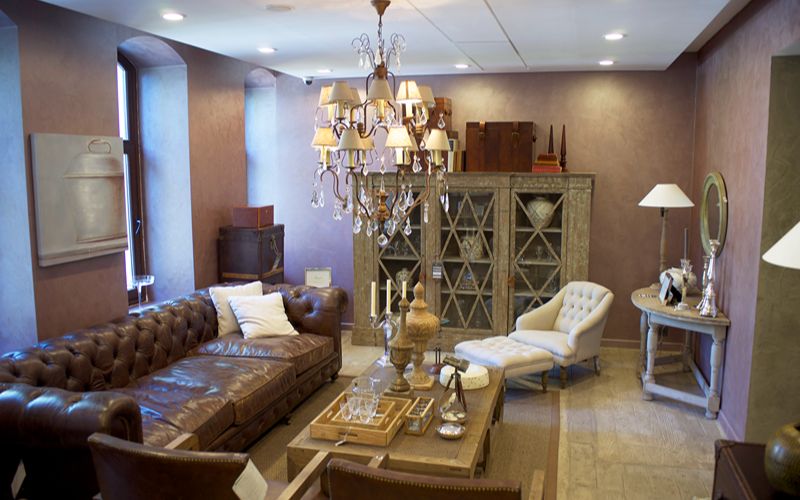
Apart from colour, furniture selection represents one of the most significant investments in shaping a home grounded in modern luxe interior design. Beyond aesthetics, these pieces establish the tone of a space and influence how it is experienced over time. Quality furniture with timeless silhouettes provides a sense of stability within an interior, creating a foundation that supports both visual coherence and everyday comfort.
Designs characterised by clean lines, balanced proportions, and exceptional craftsmanship tend to age with quiet confidence. Rather than responding to short-lived trends, such pieces retain relevance as styles evolve. A well-designed sofa illustrates this principle clearly. When constructed with a solid hardwood frame, generously filled cushions, and premium upholstery fabric, it becomes more than a visual anchor. It supports daily use, adapts to changing needs, and maintains its elegance over the years of living. Certain qualities consistently distinguish furniture that stands the test of time:
- Clear, well-resolved silhouettes that avoid unnecessary embellishment
- Thoughtful proportions that feel neither heavy nor insubstantial
- Construction techniques and materials chosen for durability rather than novelty
Prioritising classic forms over overtly trendy designs further reinforces longevity. Mid-century modern furniture, recognised for its tapered legs, gentle curves, and structural clarity, integrates naturally into modern luxe interior design schemes. These pieces introduce warmth and familiarity without appearing dated. In contrast, art deco-inspired furniture offers a different kind of refinement, relying on geometric precision, symmetry, and luxurious finishes such as lacquered wood or mirrored surfaces. When used selectively, these influences add character without overwhelming the overall aesthetic.
Mixing styles thoughtfully is often more effective than adhering rigidly to a single design era. A space that blends influences tends to feel collected rather than curated in haste. This approach prevents interiors from resembling staged showrooms, allowing personality and intention to emerge gradually through considered choices.
Implementing With Scale
Scale and proportion deserve equal attention during the selection process. Furniture that appears beautiful in isolation can feel discordant when placed within an unsuitable context. Oversized pieces may dominate smaller rooms, while undersized furniture can feel visually adrift in expansive spaces. Accurate measurements provide a practical starting point, but spatial awareness extends beyond dimensions alone. How people move, gather, and interact within a room should guide placement decisions.
Effective furniture planning often considers:
- Clear circulation paths that allow movement without obstruction
- Seating arrangements that encourage conversation and shared use
- Placement that balances openness with a sense of enclosure
Floating furniture away from walls can introduce a sense of depth and informality, creating arrangements that feel more inviting than strict perimeter layouts.
About Semi-Custom Pieces
For those seeking a higher level of refinement, investment in custom or semi-custom pieces offers opportunities for precise proportions and tailored detail. While ready-made furniture provides convenience, bespoke elements elevate an interior from polished to personal.
A custom-built media console accommodates specific storage requirements while aligning seamlessly with the room’s dimensions. Upholstered headboards in carefully selected fabrics add softness and individuality to bedroom spaces. These tailored decisions reflect the attention to detail that defines modern luxe interior design, reinforcing the idea that luxury is most compelling when it feels intentional and lived-in rather than purely decorative.
Layering Luxurious Textures
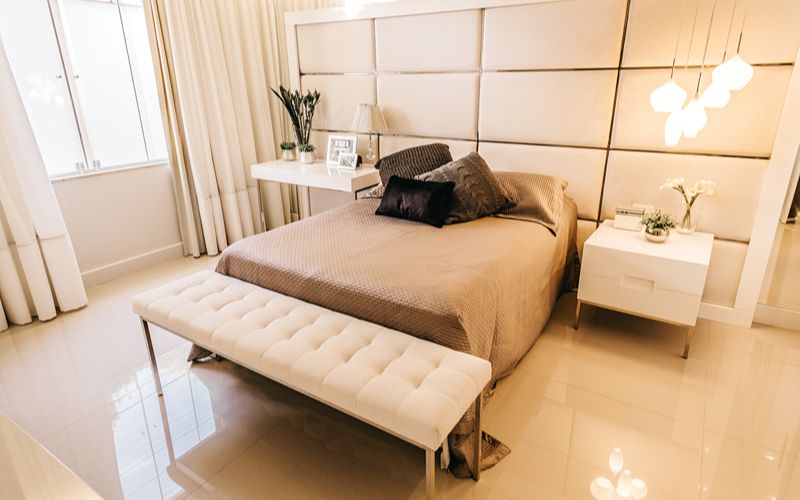
Texture provides the tactile dimension that distinguishes refined interiors from those that are merely well styled. In modern luxe interior design, surfaces are not chosen solely for visual appeal, but for the way they feel and interact within a space. Smooth marble countertops, plush velvet cushions, nubby linen curtains, and softly woven wool rugs each introduce a different sensory note. When layered thoughtfully, these elements enrich the environment, ensuring that neutral colour palettes feel considered rather than flat.
The interplay between contrasting finishes plays a central role in this approach. Visual interest emerges through balance rather than abundance, as matte surfaces temper glossy ones and softer materials offset more structured forms. Rough and smooth textures sit alongside one another, creating subtle tension that draws the eye without overwhelming it. Careful layering allows interiors to feel composed and inviting, reinforcing the understated elegance associated with modern luxe interior designs.
Natural Textures
Natural materials are particularly effective in achieving this sense of authenticity and depth. Their appeal lies not only in appearance, but in how they evolve over time. Solid wood furniture, whether crafted from oak, walnut, or teak, develops character as its surface gains a gentle patina through use. Stone surfaces such as marble, granite, and travertine offer organic variation, with veining patterns that ensure no two pieces are ever identical. Leather upholstery adds another layer of richness, softening and becoming more supple as it ages. Together, these materials introduce warmth and permanence, grounding contemporary interiors in a sense of longevity.
Several qualities make natural materials especially suited to modern luxe interior design:
- Subtle irregularities that add visual depth and individuality
- Tactile surfaces that invite interaction rather than passive viewing
- The ability to age gracefully, enhancing rather than diminishing appeal
Textiles
Textiles present the most accessible way to introduce texture and nuance into a space. Velvet immediately conveys opulence through its light-reflective pile and rich hand-feel, making it ideal for accent pieces such as cushions or upholstered seating. Linen offers a contrasting softness, with its characteristic slubs and relaxed drape bringing an element of ease. Silk introduces a quieter form of sophistication, lending a gentle sheen to curtains and decorative accents. When combined thoughtfully, these textiles create layers of visual complexity without disrupting cohesion.
Layering different fabric weights and weaves is particularly effective when done with restraint. Smooth sateen paired with chunky knits, or crisp cotton juxtaposed with flowing silk, allows each material to highlight the other. This approach adds depth while maintaining clarity, ensuring that the space feels intentional rather than overworked.
Layering With Rugs
Area rugs further anchor interiors while simultaneously contributing another important textural layer. Natural fibre rugs made from jute, sisal, or seagrass introduce organic texture that complements clean-lined furniture and contemporary layouts. On the other hand, wool rugs provide softness underfoot and offer durability suited to high-traffic areas. For those seeking a more indulgent finish, hand-knotted silk rugs bring an elevated sense of luxury, their subtle sheen catching light as it moves through the room.
Layering rugs can enhance this effect when handled carefully. A cowhide placed over a larger neutral rug, or a vintage runner set atop wall-to-wall carpeting, adds depth and visual interest without crowding the space.
Illuminating Your Space Thoughtfully
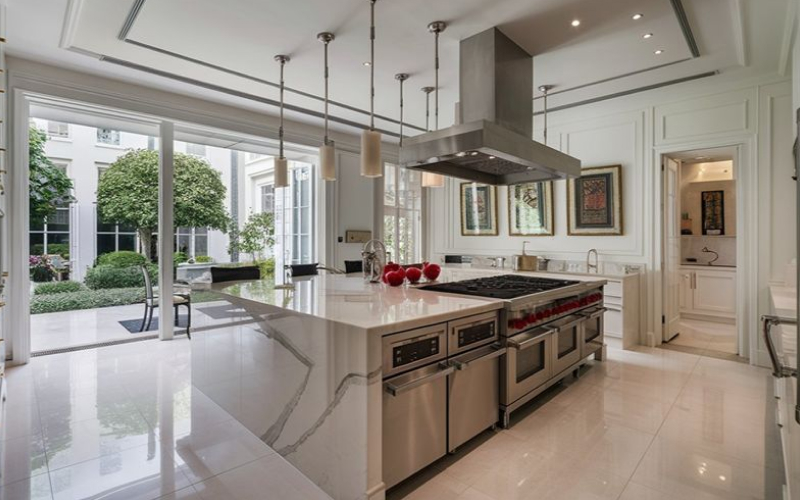
Lighting has the ability to transform interiors from simply functional to quietly expressive. In almost every modern luxe interior design, it is approached as both a sculptural presence and a practical necessity, shaping the atmosphere as much as it supports daily activity. Rather than relying on a single source, well-considered interiors build illumination in layers, allowing spaces to adapt to different moods and moments throughout the day. Ambient, task, and accent lighting work together to create flexibility, while dimmer switches introduce control, subtlety, and ease. Light should respond to how a space is lived in, not merely how it is viewed.
Ambient lighting establishes the baseline illumination of a room. Recessed ceiling lights are often favoured in contemporary interiors for their clean appearance and even distribution, providing light without visual distraction. Used alone, however, overhead lighting can flatten a space, creating conditions that feel harsh rather than inviting. Introducing floor lamps and table lamps at varying heights softens this effect, allowing light to fall more naturally across surfaces. As light and shadow begin to interact, rooms gain depth, warmth, and a greater sense of intimacy.
A layered ambient scheme typically benefits from:
- Overhead lighting for general visibility
- Secondary light sources placed at eye or seating level
- Varied heights that create softness rather than uniform brightness
Statement lighting fixtures bring another dimension to this layered approach. In modern luxe interior design, these pieces often function as visual anchors, drawing the eye while contributing to the overall composition of the room. Oversized pendant lights above dining tables or kitchen islands create focal points that define space without enclosing it. Contemporary chandeliers have moved beyond traditional crystal forms, evolving into sculptural installations defined by geometry, material contrast, and innovative construction. When lighting becomes a visual feature, it shapes the identity of a room as much as its furniture does.
Fixtures crafted from blown glass, brushed brass, or sculptural wood introduce texture and character even when unlit. Their silhouettes add interest during the day, ensuring that lighting remains integral to the design rather than an afterthought.
Task lighting addresses the more focused demands of everyday living, supporting activities that require precision and clarity. Adjustable wall-mounted reading lights beside beds offer directed illumination without crowding bedside tables. In kitchens, under-cabinet lighting brightens work surfaces, improving both safety and efficiency during food preparation. Desk lamps with articulating arms provide flexibility for workspaces, allowing light to be positioned exactly where it is needed. When chosen thoughtfully, task lighting enhances usability while maintaining visual cohesion across the interior.
Accent Lights
Accent lighting completes the composition by drawing attention to specific features within a space. Architectural details, artwork, and decorative objects benefit from gentle illumination that highlights form without overwhelming it. Picture lights mounted above artworks introduce a gallery-like quality, while LED strip lighting concealed within ceiling recesses or beneath floating shelves adds understated drama. Uplighting plants or sculptural elements creates shadows that emphasise depth and three-dimensionality.
Accent lighting guides the eye, shaping how a space is experienced rather than simply observed. When layered with intention, these lighting strategies create interiors that feel responsive, balanced, and composed. In modern luxe interior design, lighting is never incidental. It is a quiet but powerful tool that enhances atmosphere, supports function, and reinforces the refined sensibility of the home as a lived-in space rather than a static display.
Maintain Elegance Without Constant Styling
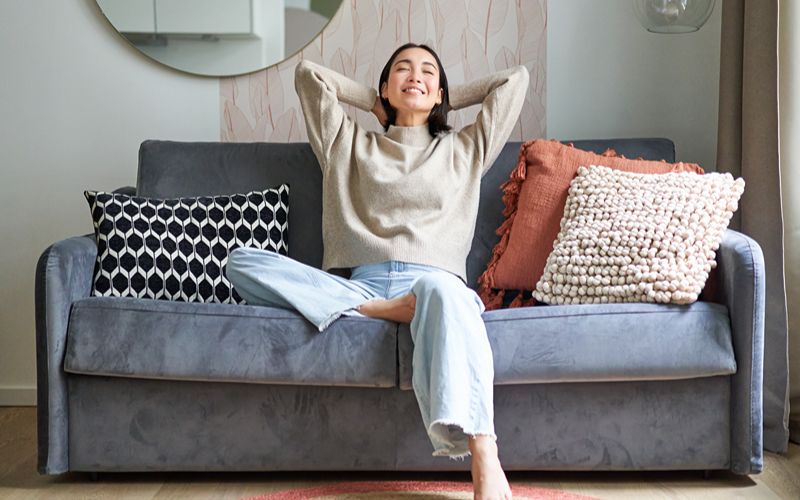
Living well at home often depends less on how frequently a space is styled and more on how thoughtfully it is set up from the beginning. In the context of modern luxe interior design, elegance is most convincing when it endures daily life rather than resisting it. Spaces that require constant rearranging or careful staging often feel performative, placing appearance ahead of comfort. True sophistication, by contrast, reveals itself through consistency, where rooms remain composed even as they are lived in.
Designing for Everyday Use
Elegance begins with recognising how spaces are actually used. Furniture layouts that prioritise comfort, circulation, and ease of movement reduce the need for frequent intervention. When seating naturally supports conversation and surfaces are positioned intuitively, rooms maintain order without effort. This approach aligns closely with modern luxe interior design, where refinement is expressed through clarity rather than excess.
Creating Natural Visual Order
Homes that feel elegant without effort often share one trait: visual order that feels intuitive rather than enforced.
Storage solutions integrated into the architecture of the space reduce the need for concealment through styling. Built-in cabinetry, concealed compartments, and well-planned circulation paths allow daily items to exist without visual noise. When clutter is reduced at a structural level, rooms maintain clarity even during busy periods, reinforcing a sense of calm that aligns closely with everyday living.
Allowing Rooms to Breathe
Negative space plays an understated but important role in maintaining visual calm. Rooms that are not overly furnished or accessorised adapt more easily to everyday activity, while open surfaces and clear sightlines prevent visual fatigue, allowing the eye to rest. The sense of breathing room reinforces the relaxed confidence that defines modern luxe interior design within a lived-in setting.
Letting Structure Do the Work
Well-considered architectural elements reduce reliance on decorative styling. Built-in shelving, thoughtfully proportioned cabinetry, and integrated storage solutions introduce order through structure rather than ornament. When storage is seamless and visually coherent, everyday items find their place without disrupting the overall composition.
Supporting Real Routines
A home that demands continual upkeep can quickly become a source of quiet frustration. True elegance accommodates routines rather than interrupting them.
When layouts support natural movement and furniture placement reflects how spaces are actually used, the home maintains its composure throughout the day. Living rooms adapt easily from quiet mornings to social evenings. Bedrooms feel orderly without daily resets.
Maintaining elegance without constant styling is ultimately about intention rather than effort. By prioritising lasting materials, clear layouts, and restrained choices, modern luxe interior design creates interiors that remain poised even as they are actively lived in.
ALSO READ: Transform Your Master Bedroom Into A Luxe Haven
Personalising Your Modern Luxe Aesthetic
Whilst design principles offer useful structure, a home achieves true refinement only when it reflects the rhythms and realities of everyday life. Modern luxe interior design is inherently flexible, allowing for a range of interpretations that respond to individual taste and lifestyle. Some interiors lean towards cooler, pared-back expressions, while others feel warmer and more layered. What matters most is maintaining a quiet balance, trusting instinct while remaining attentive to proportion, quality, and restraint.
Personalisation begins with meaningful objects rather than decorative excess. Items collected over time, whether contemporary artworks, vintage pieces, or handmade ceramics, introduce narrative and depth into an interior. These elements give a home its character, transforming it from a styled space into a lived-in environment. Displaying treasured objects from travels, family heirlooms, or personal milestones allows interiors to feel grounded and authentic rather than aspirational alone.
Effective curation plays a crucial role in this process. Selectivity ensures that individual pieces retain their presence rather than being visually diluted. A considered display often benefits from focusing on:
- Objects with personal or emotional significance
- Pieces that contribute contrast through form, texture, or material
- Items that complement the surrounding palette rather than compete with it
Allowing space around selected pieces gives them room to breathe, reinforcing the composed sensibility associated with modern luxe interior design.
Practical considerations are equally important when shaping a personalised aesthetic. Luxury interiors must support daily routines rather than resist them. Accommodating real-life needs within refined spaces often calls for thoughtful material choices and discreet design solutions. Families with young children may gravitate towards performance fabrics that replicate the appearance of natural textiles while offering durability and stain resistance. These materials preserve visual elegance without sacrificing practicality.
Homes shared with pets benefit from similar foresight. Durable surfaces such as leather or tightly woven fabrics resist wear and reduce maintenance, allowing interiors to remain polished with minimal effort. Technological needs also require careful integration. Concealing televisions within cabinetry or behind artwork helps maintain visual calm, ensuring modern conveniences do not disrupt the overall composition of the space.
When handled with intention, these practical adjustments do not detract from luxury. Instead, they reinforce the core philosophy of modern luxe interior design, where elegance is measured not by appearance alone, but by how seamlessly a home supports those who live within it.
Frequently Asked Questions (FAQs)
What is modern luxe interior design?
Modern luxe interior design is a contemporary design approach that combines clean lines and functional layouts with high-quality materials, refined textures, and understated elegance. It prioritises balance, restraint, and comfort over excess.
How is modern luxe interior design different from modern interior design?
Modern interior design focuses primarily on simplicity and function, while modern luxe interior design adds depth through premium materials, layered textures, and carefully selected statement elements without compromising minimalism.
Is modern luxe interior design suitable for small homes or apartments?
Yes. Modern luxe interior design works well in small spaces by emphasising proportion, thoughtful furniture selection, and restrained colour palettes, which help interiors feel refined rather than crowded.
What colours are commonly used in modern luxe interior design?
Neutral tones such as warm whites, greys, beiges, and charcoals form the base, with deeper accent colours like emerald, navy, or burgundy used sparingly for contrast.
Does modern luxe interior design require expensive furniture?
Not necessarily. While quality is important, modern luxe interior design focuses on investing in a few well-made, timeless pieces rather than filling a space with costly items.
What materials define modern luxe interior design?
Natural materials such as solid wood, stone, leather, metal, and refined textiles like wool, velvet, and linen are commonly used to add texture and longevity.
Conclusion
Modern luxe interior design reveals its true value not in dramatic gestures, but in how naturally it supports everyday living. It feels calm without being austere, refined without appearing precious, and considered without feeling restrictive. Spaces shaped by this approach invite use rather than observation, allowing beauty and practicality to coexist without tension.
Luxury becomes less about display and more about ease, clarity, and longevity. When design choices are guided by intention and restraint, the home evolves into a space that feels quietly elevated, deeply personal, and enduringly livable.
Visit Living Comforts and discover how considered design choices can transform your space into one that feels calm, elevated, and effortlessly comfortable.
