
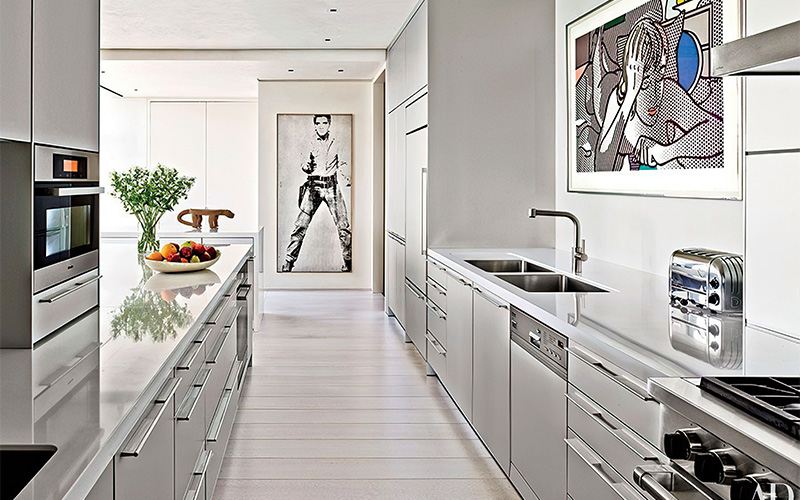
A kitchen should do more than look polished. It must support everyday tasks with ease. From meal prep to cleanup, smart design choices reduce effort and improve flow. Many homeowners overlook function when chasing aesthetics, leading to cluttered counters and awkward layouts. Interior designing kitchen spaces for real life means creating a room that works as hard as you do. It should offer proper storage, reliable surfaces, and lighting that supports every chore.
The best kitchens blend beauty with utility—where every element serves a clear purpose. Whether building from scratch or renovating, focusing on practical decisions results in lasting comfort and satisfaction. This guide explores how to shape a kitchen that enhances daily living through smart, efficient design.
Prioritising Workflow Through Smart Layouts
Designing an efficient kitchen begins with layout. Work zones define how smoothly tasks happen—preparation, cooking, and cleaning should align naturally. The classic work triangle—placing the stove, sink, and refrigerator in proximity—remains effective for most homes. This arrangement reduces steps, keeps movement purposeful, and prevents congestion in busy households.
Interior designing kitchen spaces with streamlined traffic flow helps reduce daily friction. Avoid placing major appliances behind doors or in corner spots. Position high-use items where access stays unhindered. A kitchen island can offer a prep surface, dining zone, and extra storage without disrupting pathways, especially in open layouts.
Choosing the right scale for fixtures matters. Oversized islands overwhelm smaller kitchens, while too-small countertops hinder productivity. Use consistent proportions to create balance. Visual flow enhances functionality. Clear paths between zones reduce fatigue and encourage consistent use.
Choosing Storage That Matches Usage
Storage plays a crucial role in practical kitchen design. Cabinets, drawers, and shelving should reflect daily routines. Group items by use and frequency. Keep heavy pots and pans in lower drawers near the stove. Store dry goods near prep areas and cleaning supplies under the sink.
Interior designing kitchen cabinetry with vertical space in mind increases capacity. Floor-to-ceiling cupboards hold appliances, serving ware, and bulk items while reducing clutter. Pull-out drawers, lazy Susans, and lift-up shelves enhance access in deep or corner cabinets.
Use internal organisers to maximise drawer and cabinet efficiency. Categorising utensils, condiments, and cookware save time. Floating shelves work well for daily-use items and decorative pieces but should not replace concealed storage entirely. Maintain visual calm by keeping open shelves minimal.
Selecting Surface Materials That Withstand Use
Durability defines practicality. Interior designing kitchen surfaces with wear in mind keeps maintenance low and aesthetics consistent. Countertops, backsplashes, and flooring need to withstand spills, heat, and daily abrasion.
Quartz offers a reliable, non-porous work surface, resisting stains and scratches better than many other materials. Granite, though porous, remains popular for its natural looks and resilience. Laminate works for budget-friendly solutions but shows wear more quickly.
Avoid slippery flooring. Choose textured or matte finishes for tiles or vinyl to maintain safety. Light-coloured flooring can brighten small kitchens but demands frequent cleaning. Medium tones hide dust while balancing warmth and practicality.
Backsplashes protect walls from oil and moisture. Glass, ceramic, and stone tiles provide lasting defence and visual interest. Ensure easy-to-clean finishes in splash zones near stoves and sinks.
Planning Functional Lighting for Every Task
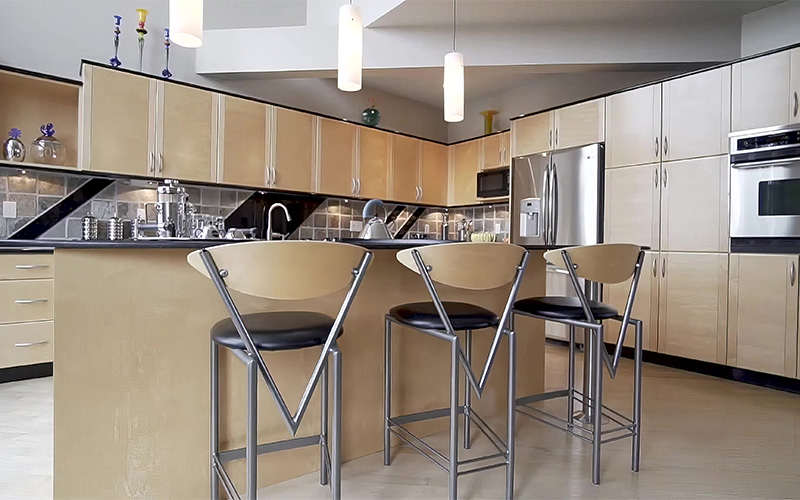
Task lighting improves usability. Overhead lights alone do not suffice for meal prep or cleaning. Use layered lighting—general, task, and accent lighting—to cover the entire space.
Pendant lights work well over islands or breakfast bars. Under-cabinet lights offer clear visibility for chopping and cooking. Interior designing kitchen lighting schemes with flexibility allows households to adapt settings to mood and need.
LED fixtures reduce energy usage and last longer. Warm tones create comfort, while cooler tones offer clarity for chopping or baking. Place dimmers for main fixtures to adjust the ambience for evening meals or early mornings.
Avoid shadows in work zones. Place light sources in front or above the hands when preparing food. Skip overly decorative fixtures if they sacrifice output or cast glare.
ALSO READ: Lighting Tricks That Bring Out The Best In An Industrial Style Interior
Integrating Appliances Without Disrupting Flow
Appliance integration builds harmony and frees up space. Choose built-in ovens, dishwashers, and fridges that match cabinetry lines. Flush installations create clean sightlines and improve safety by eliminating protrusions.
Interior designing kitchen setups with concealed range hoods or microwave drawers streamlines work surfaces and maximises movement. Opt for appliances scaled to kitchen size. Double ovens may overwhelm compact homes. Drawer-style dishwashers work well in smaller households.
Minimise counter clutter by assigning specific homes for each appliance. Tuck toasters or blenders into appliance garages or lift-up cabinets. Keep worktops clear to enable efficient meal prep and daily cleaning.
Technology integration boosts convenience. Smart ovens and fridges track usage patterns or offer remote control. Prioritise features that support your routines, not just novelty.
Looking for more practical ideas to transform each room into a functional sanctuary? Visit Living Comforts for decor guides, design blogs, and lifestyle tips that bring ease and style into everyday life.
